Friday, 24 February 2017

LB&SCR A1/A1X Terriers: Stroudley 4 Wheel Coaches

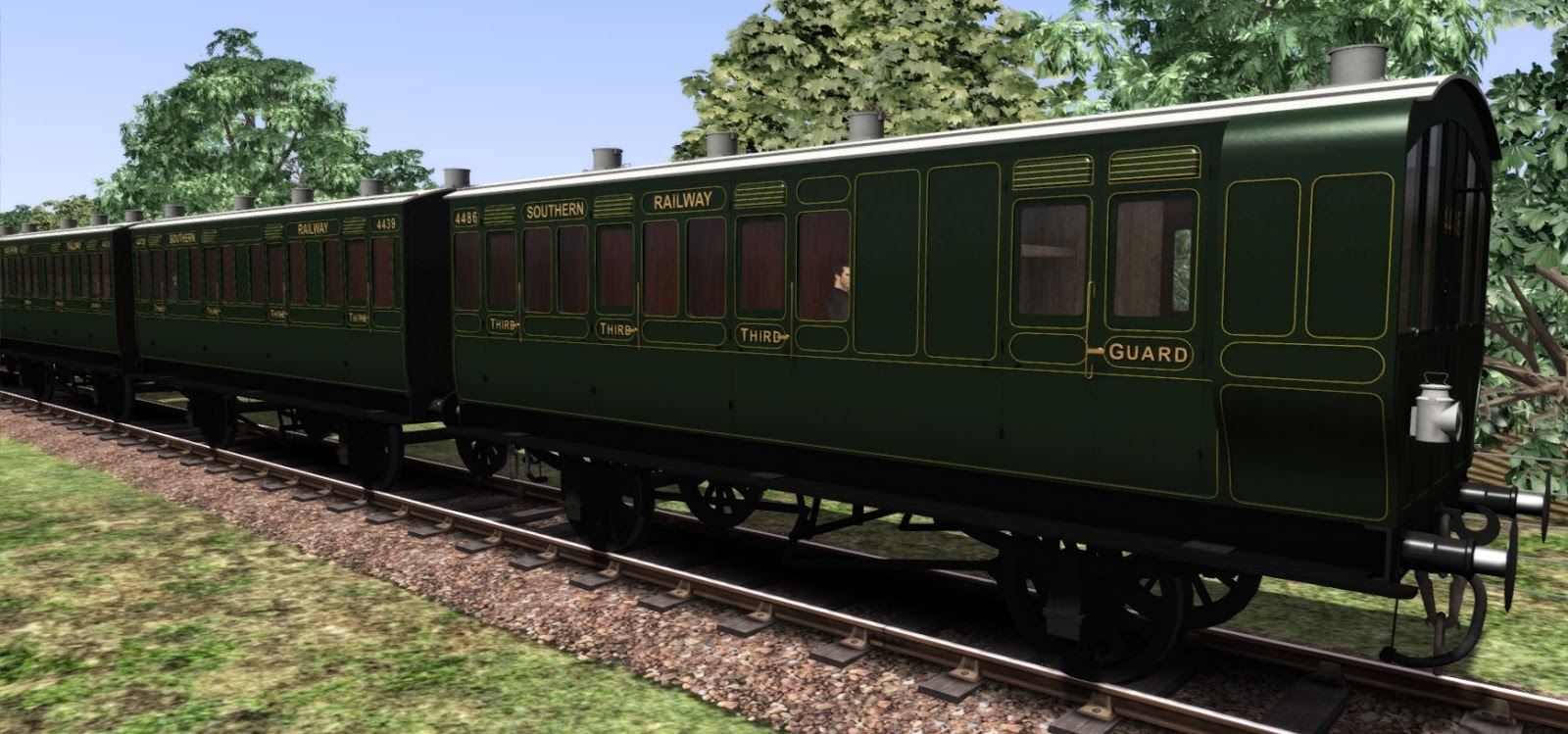
To accompany our Stroudley Terriers we have built some Stroudley 26ft 4 wheel coaches which would have been used frequently by these engines under the LB&SCR and Southern Railways on local branch services.

They were built from mahogany with teak framing and had various interiors fitted to the same shell which has allowed us to create a base model and provide all of the classes very efficiently.
The first task was to build the base model.


We then constructed interior compartments using the following guidelines:
First class – blue colour scheme, plush cushions with blue buffalo hide in smoking compartments
Second class – brown colour scheme
Third class – bare wooden seats


Using these compartments we filled the empty coach shells to the following types:
First class, Second class, Third class, First/Third class composite.


Finally we needed to build the brake coach with its large front windows and rear looking "wings". These were placed at the ends of each consist so the engine could run around and always have a guard in a brake coach at the rear of the train.


A typical consist was as follows: Brake/Third, Third, First, Second, Third, Brake/Third which weighed in at just under 60 tons.

The correct shade of mahogany has been the subject of much debate however we believe that Victorian mahogany tended to be of a reddish hue (rather than the more purple colour of current sources of wood) and the red undercoat tended to bring this out also and this is the colour that we have used.

On entering Southern service the coaches were painted in Southern Green and we have duplicated all of the coaches in this livery as well.


Next week we'll be taking a look at the first of the many liveries which we will be creating. Anyone for some Marsh Umber?

Tuesday, 14 February 2017

LB&SCR A1/A1X Terriers: A1X Options

Today we are going to take a look at the optional parts available for the rebuilt A1X Terriers. These parts will eventually be available for ALL liveries, but today will only be shown on the completed Stroudley Improved Engine Green version - so if you think some (or all!) of these options weren't available on this named loco in this livery... then you are very likely correct! It's a sample of what will be available on ALL liveries we provide - which will hopefully be a lot!

So lets begin with the A1X as "standard".


All of these listed options can be selected using the locomotive numbering system in the standard scenario editor, and changing the first of these characters allows us to change the frames from red to black (which is the standard on most other liveries). You can also choose to have the visible Westinghouse brake system removed as some engines did.


Next up is the choice of the bunker and extra bars. The above pictures shows the coal bunker as built which could carry just over half a ton of coal however various ways were introduced to make the Terriers go that little bit further.

First they added bars to the top of it. Open bars originally and then closed bars due to the smaller lumps of coal falling out between them (1 & 2 below)
The Kent & East Sussex railway used a different set of open bars (3) but eventually they rebuilt their bunker to be slightly higher (4) but even this wasn't enough and they added bars as well (5). The largest bunkers were those modified by the Isle of Wight Railway who kept the same height but extended it rearwards right up to the buffer beam (6) allowing almost 1 ton to be carried.


Chimneys come in 3 different styles; the original Marsh chimney (left) which was fitted when the A1X's were re-boilered from the A1 engines. Centre is the Drummond chimney fitted to some of the engines rebuilt by the Southern Railway and finally the Isle of Wight cast chimney.


To run on the Southern Railway network a system allowing for 6 lamps or discs rather than the standard 4 was required and this was achieved on the Terriers by adding lengthened brackets allowing 2 more lamps or discs to be "stacked" on the left or right sides.


Many of the Terriers had their lubricators changed during their lifetimes and additional oil feed boxes were often added to the front of the tanks. The Isle of Wight Railway also added handles to the tank fronts on some of the engines - presumably to make them easier to climb up to for watering!


A common attachment to a Terriers chimney, especially on the Hayling Island branch line, was a spark arrestor. These were designed to stop the small fragments of burning coal that were often thrown out of a steam engines chimney when they were working hard. We've read various reasons for why they were used (sparks could set lineside grass and bushes on fire for example) but on the Hayling Branch it seems to have come from the danger of setting light to the wooden bridge over Langstone Harbour.


During their time under Southern ownership some A1X's were fitted with a Drummond dome and safety valves.


The Isle of Wight Terriers had a "hooter" fitted rather than the traditional whistle.


Also part of the Isle of Wight style of rebuild; rather than adding the small curved splasher these had a combined splasher and sand box which was more akin the original A1 splasher style and was lined in a similar fashion.


Finally putting some of these options together we see below a fully kitted out Isle of Wight (IOW) rebuild using: IOW bunker, IOW cast chimney, lubricator boxes and handles on the tank fronts, IOW hooter and IOW splashers. Also shown are the additional weights added to the front and rear wheels by the IOW Railway.


As you can see there are many ways that you can choose to have your A1X set up and these options will be available for all liveries. We will of course include pre-made lists when you place down any Terrier in game which will show the correct names, numbers and fittings for each livery provided.

Next time we'll be taking a look at either some LB&SCR coaches or another livery depending which have progressed the most!

Friday, 3 February 2017

LB&SCR A1/A1X Terriers: A1X Cab

Having looked last week at the external changes made to the rebuilt A1X Terriers, this week we're looking inside the cab to see how that changed.
And we find that just as with the clean design of the original A1 the inside became just as messy and jumbled as the outside!

The most obvious change is the vacuum brake pedestal placed in front of the driver. This connects directly to the vacuum exhaust pipe outside on the left hand side of engine. The steam intake pipe is routed from the right hand side across the front of the cab, weaving its way between the dials.


Looking to the other side we can see that the pressure gauge that was against the right hand wall has been moved (the wooden mounting plate can still be seen, painted over in the same colour as the walls) and a hydrostatic lubricator put in its place. Interestingly the steam feed for this enters the cab through the hole that was originally used for a tap controlling the condensor, now no longer required due to the fitting of injectors. Above the lubricator is the gauge for the coaches steam heating.


An extra control has been added to the backhead for the steam powered sander, which replaces the A1's gravity fed system. Also seen here is the air brake duplex gauge which was moved from the left hand wall due to the placement of the vacuum brake controls.The engine is air braked separately from the vacuum train brake and in Advanced mode you will need to use the appropriate brake to slow down.


The drivers view from the front window (you may notice that we've improved the glass texture since last week and this has been applied to the A1 as well). The steam injector taps are clearly visible above the backhead either side of the whistle pull. The water for the injectors is still controlled from the old water taps either side, however due to the location of the vacuum brake pedestal the driver's side one is quite tricky to get to in real life and having to open it and screw the nut that holds it in place while not burning your hands on the pipes is apparently something of a challenge!
The dual vacuum gauge is a new addition as well.


The view forwards from the fireman's side.


And as with the A1 cab, headout views with working controls are provided...


... for both sides.


So that wraps things up for the driving positions.
Next week we'll be looking at the many optional components that will allow the creation of dozens of different Terrier appearances - and that's before we even get to any more liveries.

Friday, 27 January 2017

LB&SCR A1/A1X Terriers: A1X, so what changed?

Today we're taking a look at the Terrier in it's rebuilt A1X version.
21 of the original 50 Stroudley A1's were rebuilt this way and as 14 of the 15 Terriers that made it into BR ownership were of this A1X type they are likely more familiar to people now.
There are quite a few variations on the A1X (almost as many as there are engines!) and we'll be showing the options for those soon but for today we present the A1X in it's "purest" form.
As with the A1 shown last week you can use any name and any number with the engines and they come with all 21 of the original names and numbers set up and ready to go.


The most obvious change is the new extended Marsh boiler and new smokebox, and therefore the reshaping of the wheel splashers, and the removal of the condensing pipes either side. The A1X was changed from the condenser and pump system to the more familiar injector system and this can be seen by the wisps of steam coming from the injector pipes between the front and middle wheels, and obviously with a different set of controls in the cab.

 
Also changed are the sanders having lost the sand boxes above the running plate which were part of the original wheel splashers and are replaced with steam powered sanders (some of the Isle of Wight rebuilds kept a combination of the new and old splashers, retaining the old sanders, and this is one of the options we'll show later).


The old copper capped chimney has been replaced with the much plainer Marsh cast version and both buffers now carry vacuum brake pipes as well as the original air pipes.


The top view shows the significant changes that were required for the replacement of the water pumps with injectors and the addition of the vacuum brake.
On the left hand side of the locomotive the exhaust (black pipe) from the vacuum brake can be clearly seen running all the way to the smokebox and the intake (grey, insulated wrapped pipe) from the top of the boiler.
Also visible are the 2 copper pipes that drop down the front of the water tanks which take the water from the boiler to the injectors and the other long copper pipe which is the re-routed exhaust from the Westinghouse air pump. Some brackets and firebox tools are also squeezed in to make the whole scene very "busy" compared to the cleaner appearance of the A1.

Next week we'll take a look inside the A1X cab and see what all of these changes and additions have done to the driving position.

Monday, 23 January 2017

LB&SCR A1/A1X Terriers: A1 Cab

Before we begin today we wanted to address a question that is being asked on an almost daily basis...
"Are you doing X named Terrier?"
To which we've been replying - READ THE LAST BLOG POST! We're not sure if people only look at the pictures (in which case typing this is probably pointless!) however the last blog post covered how the naming is going to work.
To summarise, you can have ANY name (5 to 11 characters) and number (2 digits) that you want. We'll be including files to show the names and numbers of ALL of the original Terriers however you can name the engines ANYTHING you want to.
ANYTHING!
Thank you for reading.

Ok, now we've got that off our chest...

Today we're taking a first look inside the cab of the A1 Terrier as originally built. A very spartan and clean appearance compared to later locomotives and even compared to the A1X variant which we'll be looking at soon.

Looking towards the driver position


And looking to the fireman's side


Even the backhead has a minimal number of controls, clearly lacking any kind of steam injector taps as these engines used a condenser to pre-heat the water and pumps to push it into the boiler.


The rear of the cab just has a handbrake and the coaling door (which uses notches in the back wall to hold it open), with the cylinder cocks lever on the driver's seat.


The large windows give a really good view ahead and you can clearly see one of the water taps (bottom left of the picture) which allows the water into the pump. These are locked in place using a wing nut.


Finally the driver and fireman head out views which still allow full use of all of the cab controls.


That's it for today. On Friday we'll be taking a look at the A1X version of the Terrier and its modernisations and modifications.

Monday, 16 January 2017

LB&SCR A1/A1X Terriers: What's in a name?

Happy New Year everyone!
We hope that you all had a good Christmas and are enjoying the start of 2017.  We've been very busy back at work and have a few things to show this week.

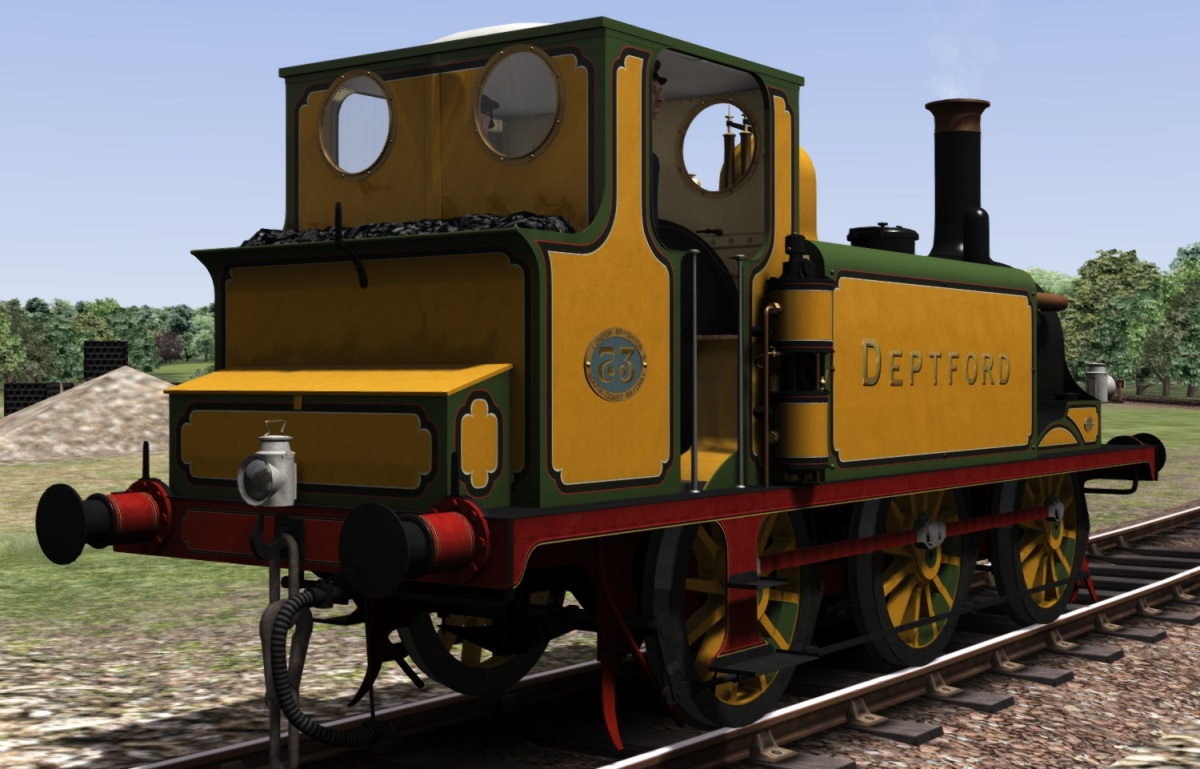
Today we are delighted to show the completed A1 Terrier, in game, in Stroudley's Improved Engine Green livery; seen here as No. 73 Deptford.


Also shown is the dynamic naming system for this livery which will feature on the the A1 and A1X Terriers. The engines can carry any name from 5 to 11 characters which covers all 50 original class members. You can also have names less than 5 characters although these will be padded so will not cover the whole tank side.

Here we see an A1 named as No. 59, Cheam


.. and a fictional engine No. 99 Victory


As you can see the name spaces correctly across the entire tank side and begins with a larger first character.
The shortest engine names were Cheam and Ewell, the longest were Bishopsgate, Whitechapel, Rotherhithe and Crowborough.


The engine can also be given any number from 00 to 99 and both of these are dynamic and can be changed by simply typing the number and name into the engine number in the scenario editor.
This system will also be used for any other liveries that have names anywhere on the engines.

That's all for today but over the next couple of weeks we'll be looking in the cab of the A1, and also taking a look at the A1X variant, some of the optional parts available and we'll discuss the A1's Advanced Mode condenser system and water pumps which will make for a whole new experience when it comes to filling up the boiler.